
Learn how Tokenized Assets are transforming investing by improving liquidity, accessibility, transparency, and ownership through blockchain technology.
The Growing Role of Tokenized Assets
The financial world is undergoing a significant transformation as blockchain technology creates new ways to own, trade, and manage investments. One of the most important innovations driving this change is Tokenized Assets, which convert ownership rights of physical or digital assets into blockchain-based digital tokens. This approach is opening new investment opportunities while improving efficiency, transparency, and accessibility across global markets.
From real estate and company shares to artwork and commodities, Tokenized Assets are reshaping how investors participate in financial markets. As blockchain adoption continues to grow, asset tokenization is expected to become an increasingly important part of the global economy.
Understanding Tokenized Assets
Tokenized Assets are digital representations of ownership stored on a blockchain. Each token represents a share or portion of an underlying asset, allowing ownership to be transferred securely through blockchain technology.
Unlike traditional paper-based ownership records, blockchain provides transparent and tamper-resistant documentation that can be verified by authorized participants.
Expanding Investment Accessibility
One of the greatest advantages of Tokenized Assets is increased accessibility. Traditional investments often require substantial capital, making certain opportunities unavailable to many individuals.
Tokenization enables fractional ownership, allowing investors to purchase smaller portions of valuable assets instead of buying them outright. This broadens access to investment markets that were previously limited to large institutions or wealthy investors.
Improving Market Liquidity
Many traditional assets, such as commercial real estate or fine art, can be difficult to buy or sell quickly. Tokenization improves liquidity by allowing ownership interests to be traded more efficiently through blockchain platforms.
Greater liquidity benefits both investors and asset owners by simplifying transactions and expanding the potential buyer base.
Enhancing Transparency
Blockchain technology records every transaction on an immutable distributed ledger. This creates greater transparency throughout the ownership lifecycle of Tokenized Assets.
Investors can verify transaction histories, ownership records, and asset transfers more efficiently, helping build confidence and reduce the risk of fraud.
Smart Contracts Streamline Transactions
Smart contracts automate many administrative processes involved in buying, selling, and managing tokenized investments.
These self-executing agreements automatically process transactions when predetermined conditions are met, reducing paperwork, minimizing delays, and lowering administrative costs.
Real Estate Tokenization
Real estate remains one of the fastest-growing sectors for Tokenized Assets. Property developers and investment firms increasingly use blockchain to divide ownership of commercial and residential properties into digital tokens.
This allows investors to participate in property markets with smaller investments while improving transaction efficiency and portfolio diversification.
Expanding Beyond Real Estate
Although property tokenization receives significant attention, many other asset classes are also being tokenized.
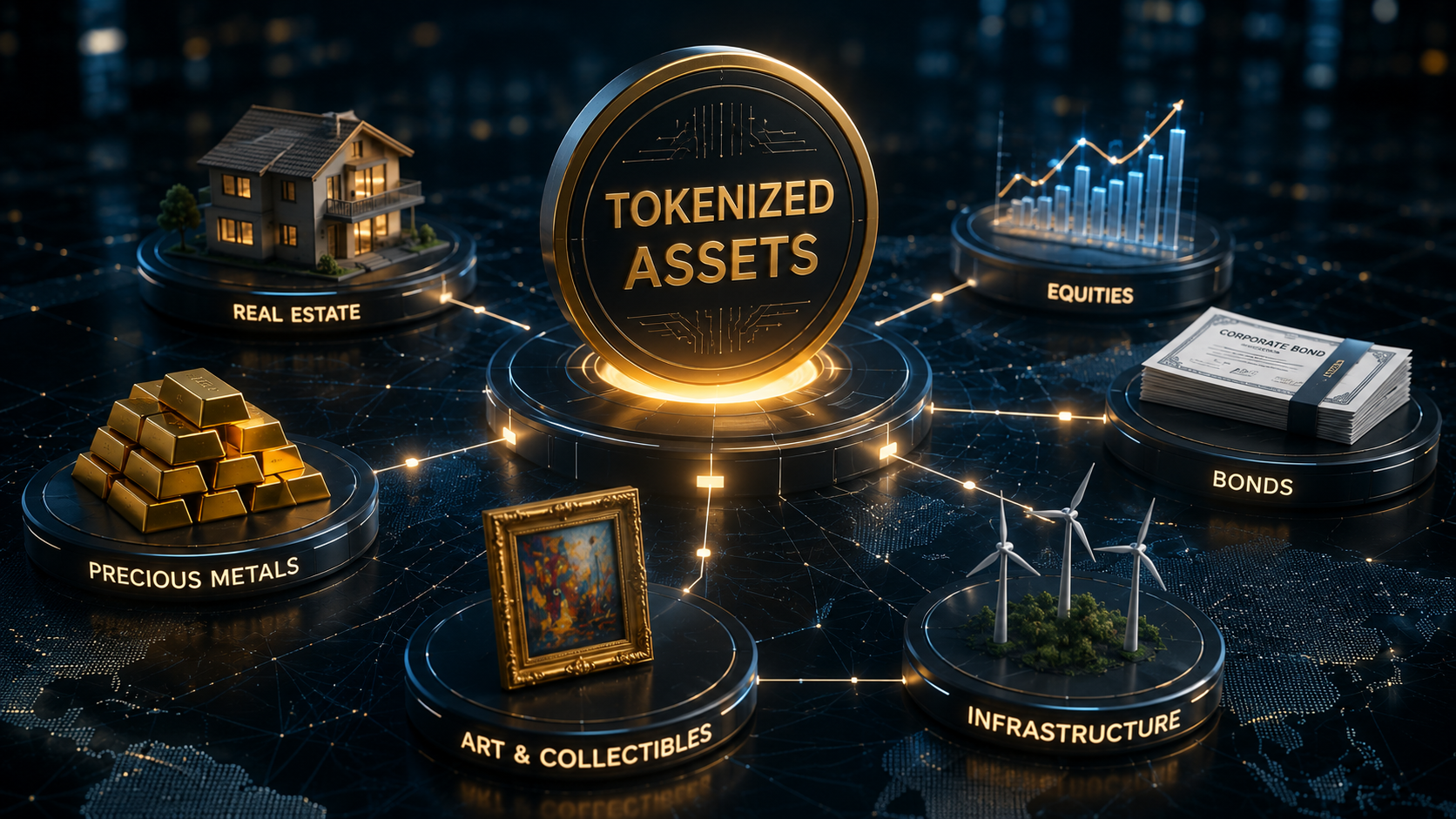
Stocks, bonds, commodities, intellectual property, collectibles, luxury goods, and infrastructure projects are increasingly adopting blockchain-based ownership models to improve accessibility and operational efficiency.
Strengthening Security
Blockchain provides advanced security features that protect ownership records from unauthorized changes. Cryptographic verification and decentralized storage make it more difficult for fraudulent transactions to occur.
These security advantages contribute to growing confidence in Tokenized Assets across both institutional and retail investment markets.
Regulatory Developments
As tokenization continues expanding, governments and financial regulators are developing legal frameworks to support secure and compliant digital asset markets.
Clear regulations are expected to improve investor protection while encouraging broader adoption of blockchain-based financial products.
The Future of Tokenized Assets
As blockchain technology matures, Tokenized Assets are expected to become a standard component of global investment markets. Financial institutions, technology companies, and governments continue exploring new tokenization opportunities that improve efficiency, expand market participation, and reduce operational complexity.
The continued growth of decentralized finance and digital infrastructure will likely accelerate adoption across multiple industries.
Conclusion
Tokenized Assets represent one of the most significant innovations in modern finance. By enabling fractional ownership, improving liquidity, strengthening transparency, and simplifying transactions through blockchain technology, tokenization is reshaping how assets are owned and traded. As technology advances and regulatory frameworks continue evolving, Tokenized Assets are expected to play an increasingly important role in creating more accessible, efficient, and inclusive global financial markets.
FAQ
1. What are Tokenized Assets?
Tokenized Assets are blockchain-based digital tokens that represent ownership or rights to physical or digital assets such as real estate, stocks, commodities, or artwork.
2. What are the benefits of Tokenized Assets?
They improve investment accessibility, increase liquidity, enhance transparency, reduce transaction costs, and enable fractional ownership.
3. How does blockchain support Tokenized Assets?
Blockchain provides secure, transparent, and immutable records of ownership while enabling efficient peer-to-peer transactions through distributed ledger technology.
4. Which assets can be tokenized?
Many assets can be tokenized, including real estate, company shares, bonds, commodities, intellectual property, luxury goods, collectibles, and infrastructure investments.
5. Are Tokenized Assets becoming more popular?
Yes. Growing blockchain adoption, financial innovation, and evolving regulations are driving increased interest in Tokenized Assets among businesses, financial institutions, and investors worldwide.
