
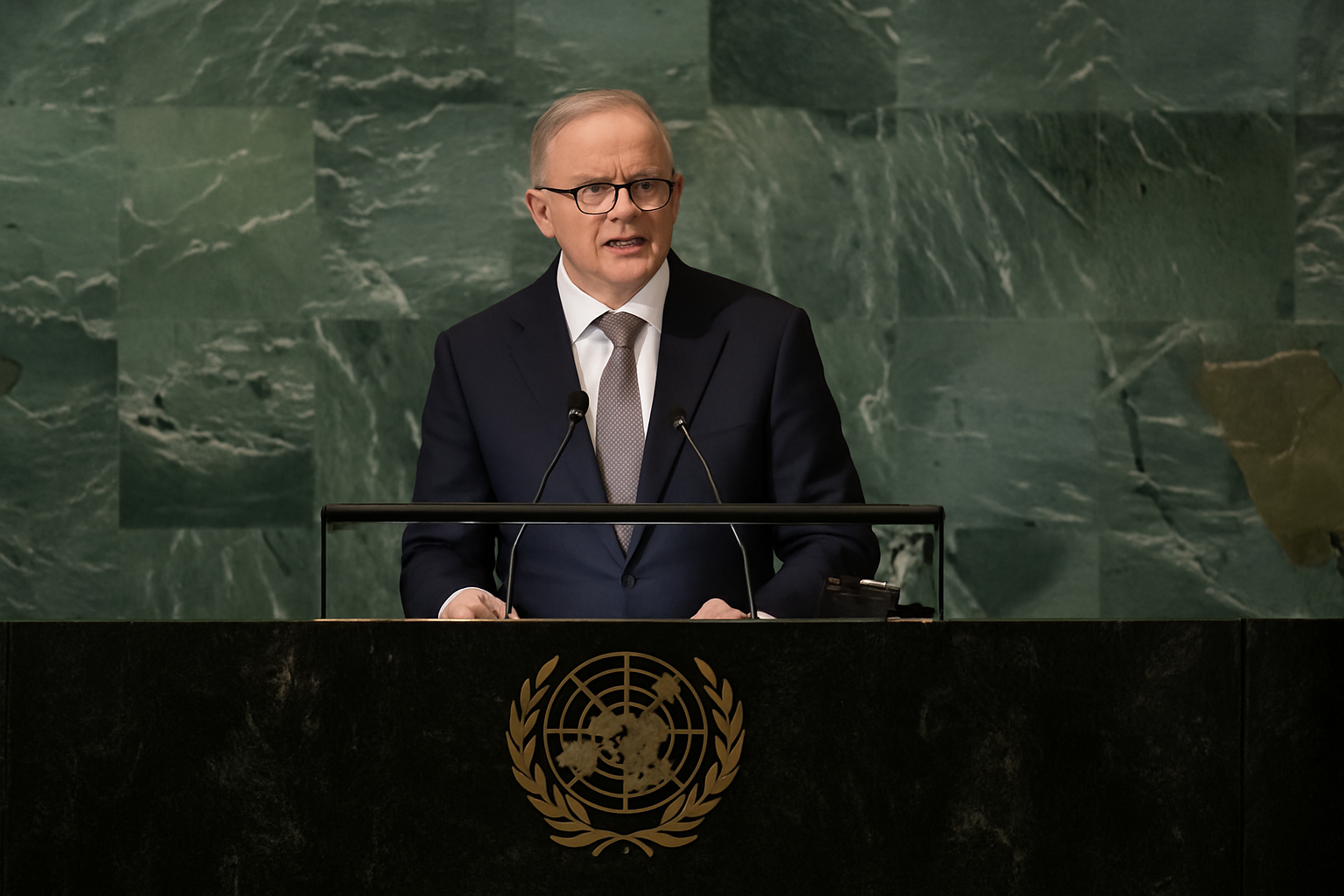
Canberra launched a high profile bid this week for a non permanent seat on the United Nations Security Council for the 2029 to 2030 term, with Prime Minister Anthony Albanese using his speech to the UN General Assembly on September 25, 2026 to make the case. The campaign is being presented by the government as a chance to push for stronger cooperation on peacekeeping, humanitarian access, and rules based international order at a time of intensifying geopolitical strain.
Why Australia is running
The Albanese government says the campaign builds on Australia’s long standing involvement in the United Nations and in international peace and security. Officials argue that holding a seat at the Security Council will allow Canberra to press for practical outcomes on ongoing conflicts, support smaller and middle sized countries, and promote reform of multilateral institutions to make them more effective.
In his UNGA address, the prime minister cast the bid as a utility for advancing global order and prevention, pitching Australia as an experienced contributor to peace operations and multilateral responses to crisis. The government has emphasised priorities such as maritime security, humanitarian protection, and strengthening multilateral cooperation on emerging threats including the governance of advanced technologies.
Timing and diplomatic context
The formal launch during the UN General Assembly coincides with a packed diplomatic week for Australia in New York, where ministers and senior officials have been active in bilateral meetings and multilateral caucuses. The government is already seeking support among regional partners and middle powers, and has signalled the campaign will be a central theme of its diplomacy over the next two years.
Australia last served on the Security Council in 2013 and 2014. Canberra’s bid is being positioned as a middle power effort to protect an international system that the government says is increasingly under strain from great power competition and prolonged wars.
Competition and the road ahead
So far, a handful of states have expressed intent to contest seats that will be allocated to different regional groups in the rotation of non permanent members. Publicly declared competitors and the composition of the field will shape campaign dynamics in the months ahead. Winning a seat requires broad support from UN member states in the General Assembly, and Canberra’s diplomats will now intensify outreach across regions to secure the necessary votes.
To build momentum Canberra will combine public messaging about its contributions to peacekeeping and humanitarian efforts with private diplomacy aimed at countries whose votes decide the outcome. The campaign is expected to target Africa, the Pacific, and Latin America, regions where Australia has sought to deepen partnerships in recent years.
Domestic and international debate
The decision to pursue a seat has attracted debate at home about priorities and costs, and about how Australia will balance relationships with major powers if elected. Some critics warn that campaigning for influence at the UN could require policy compromises on contentious international issues. Others argue that Australia should use the platform to press more forcefully on human rights and humanitarian protection.
Internationally, the campaign arrives amid sensitive global discussions, including debates at UNGA this year over responses to armed conflict and humanitarian access. Observers will watch how Canberra positions itself on those issues during its run, and whether the campaign changes its voting patterns or public diplomacy in ways that affect bilateral relations with major partners.
Why this matters
A seat on the Security Council would give Australia direct voice and vote on decisions that determine sanctions, peacekeeping mandates, and authorisations for interventions. For a country that emphasises multilateralism as a pillar of foreign policy, the campaign is a strategic effort to regain influence inside the UN system at a moment when the council faces criticism for gridlock and politicisation.
For Pacific partners and other small states, Canberra says a successful campaign could mean a stronger advocate for issues such as maritime security, climate linked stability, and development financing inside the council. For the broader international community, Australia’s bid underscores the continuing importance of middle powers in efforts to keep the UN relevant and operational.
Next steps
Canberra will now intensify diplomatic outreach, present a formal campaign platform to UN member states, and seek endorsements from regional groupings. The government has signalled the campaign will span the next two years leading up to the UN General Assembly vote that will decide the non permanent members for the 2029 to 2030 term.
As the campaign unfolds, diplomats and analysts will track whether Australia’s positions on urgent international crises evolve in ways designed to broaden its appeal among UN member states, and how Canberra balances campaigning with long term relationships among major powers and regional partners.